Skip to content
Elmer Augusto Jacobo Otiniano, Product engineer · Full stack

Elmer Jacobo

Product engineer · Full stack

  • Trujillo, PE
  • Remote · UTC−5

I build digital products that move from idea to real use.

I work with you from product definition to launch: interface, product logic, payments, and a foundation your team can maintain. I use AI when it solves a concrete task.

From problem to productMethod
  1. 01Problem
  2. 02Decision
  3. 03Build
  4. 04Launch

Each step leaves a visible decision

Let's talk about your productExplore

01

Projects

These are products I built by my own initiative or published as open source. They show how I think and how I work.

01Open source · InsForge2026
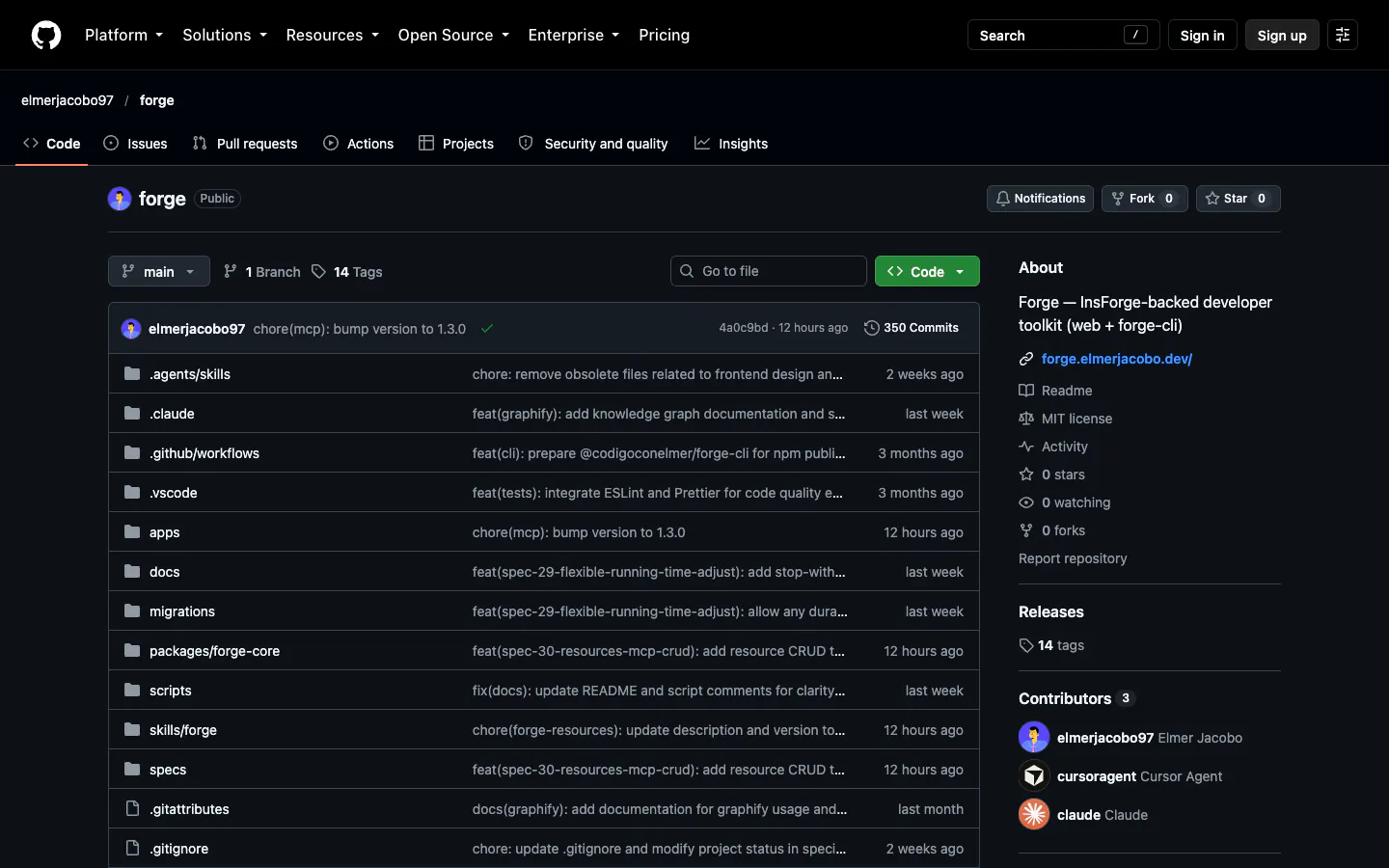
Public Forge GitHub repository with code, README, and web plus CLI tooling

Forge

A workspace for planning, debugging, and shipping software.

Forge brings a Dev Board, HTTP inspection tools, endpoint monitoring, reusable resources, and a synced CLI into one account.

Open project

Next.js · React · TypeScript · InsForge

02Open source · Individual2026
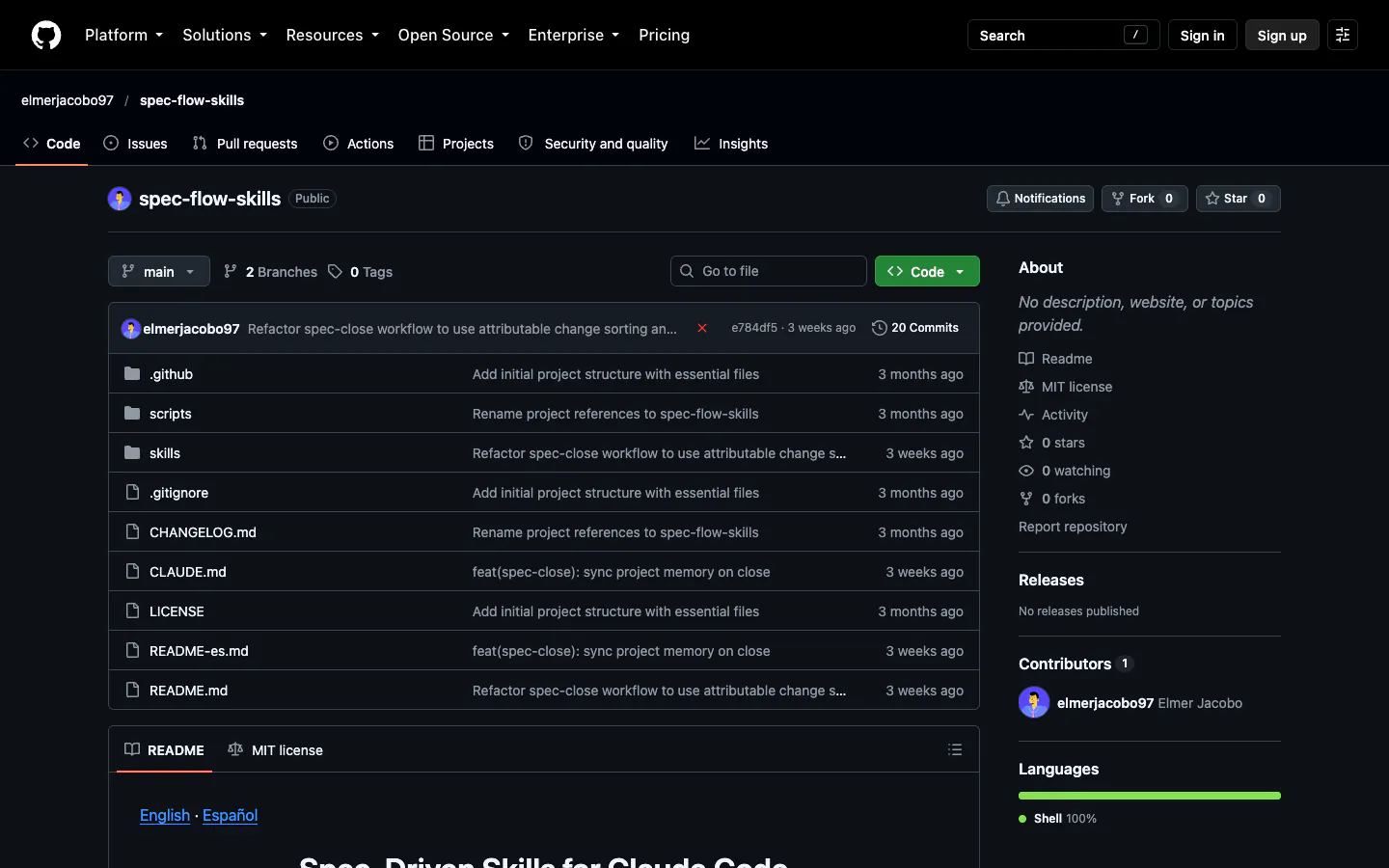
Spec Flow Skills README showing the specification and implementation flow

Spec Flow Skills

Spec-driven design for coding agents.

Two open-source skills that separate planning, human approval, and implementation so agents cannot improvise product decisions.

Open project

Claude Code · Agent Skills · Markdown · Cursor

03Open source · Individual2026
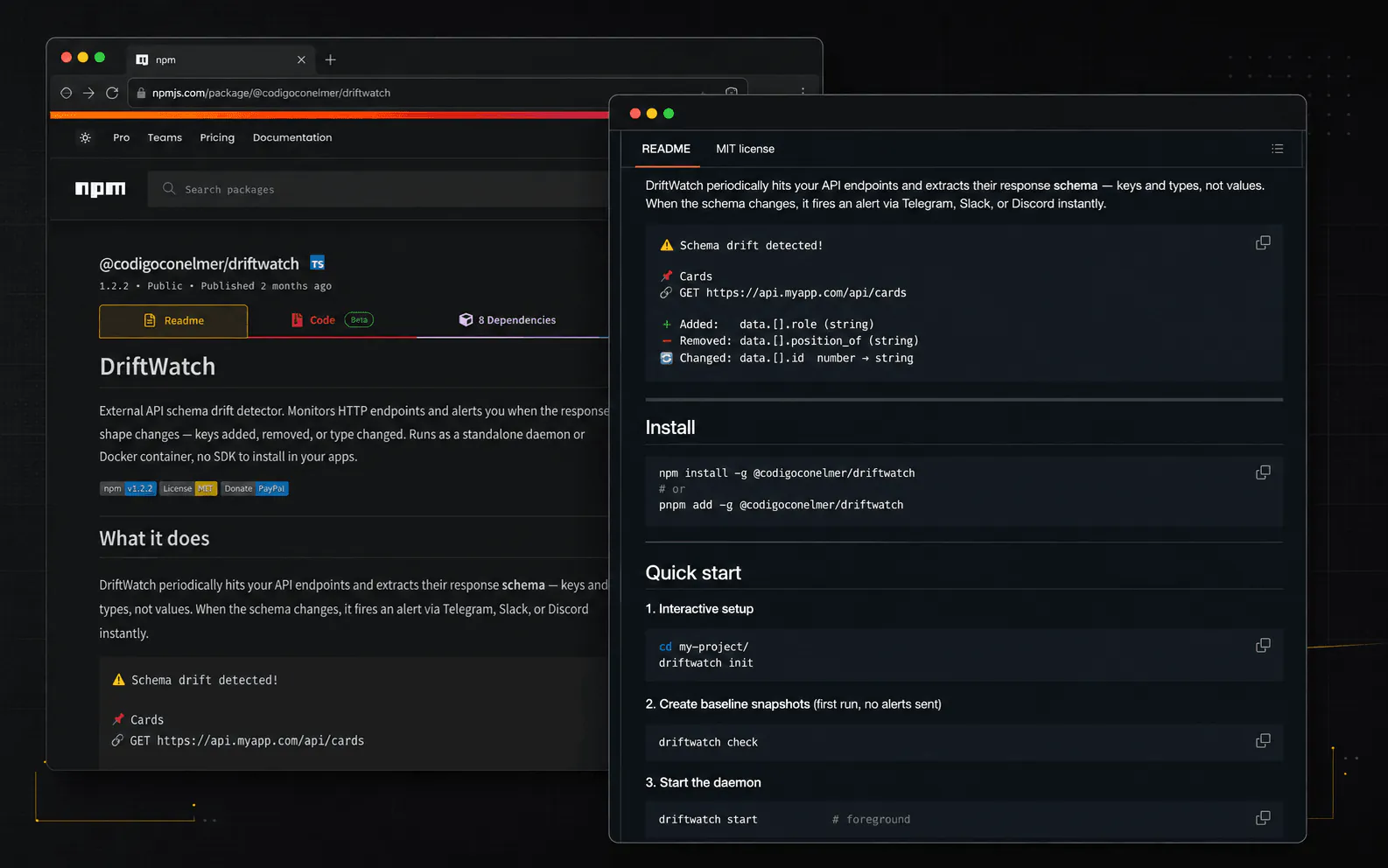
DriftWatch npm package beside its schema-change alert and installation guide

DriftWatch

Detect schema changes before they break your app.

A CLI and daemon that monitors HTTP endpoints and alerts through Telegram, Slack, or Discord when a response structure changes.

Open project

TypeScript · Node.js · Telegram API · Slack API

04Personal product2025
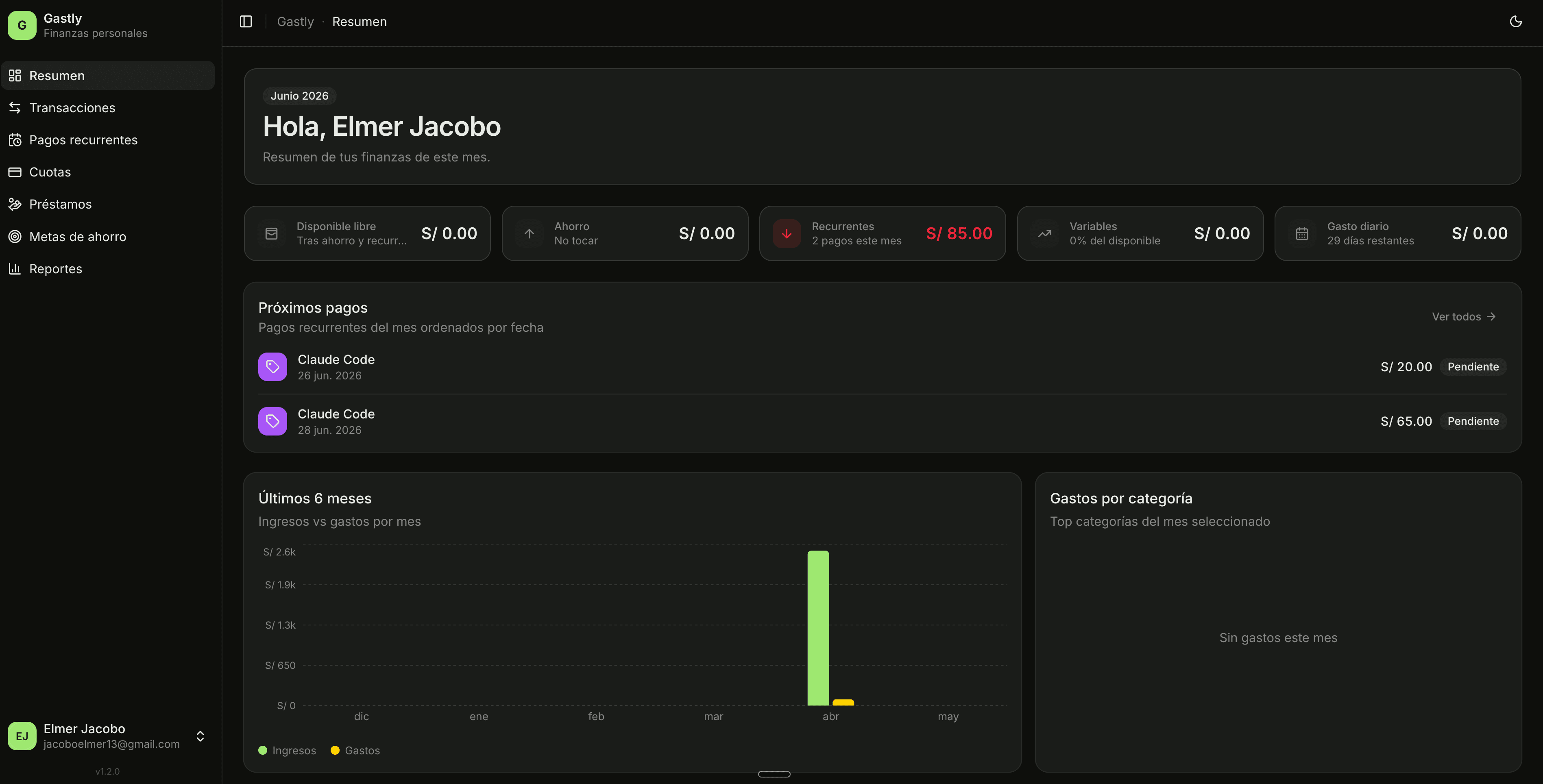
Gastly dark dashboard with a monthly summary, payments, and finance charts

Gastly

Personal finance designed around real daily use.

An application for managing transactions, budgets, loans, installments, savings, and recurring payments in one system.

Open project

Next.js · React · TypeScript · Supabase

02

Experience

Products I have contributed to professionally. I show my responsibility and context without presenting them as personal property.

01

Professional contribution

Tarjetly

A dashboard for creating and managing digital cards, with Stripe subscriptions and Groq-powered content generated from real profile data.

Role: Full Stack DeveloperTarjetly · B2B SaaS

Open project

02

Professional contribution

Sismol

An internal dashboard with sensors, metrics, alerts, and reports that centralizes operations for ABEHA rainwater harvesting systems.

Role: Full Stack DeveloperABEHA · Operations

Open project

03

Approach

Portrait of Elmer Jacobo Otiniano

I work with people who need to build, improve, or put an existing digital product in order. I connect a business decision to a clear interface and a technical foundation the team can maintain.

I have spent more than four years building web and mobile products in production. I have worked on admin dashboards, SaaS products, APIs, payments, and internal tools. I like working close to the person who knows the business, not only the codebase.

In my current work, I have led architecture decisions for a SaaS platform with more than 200 active users. I migrated a Laravel backend from version 9 to 12, integrated Stripe, and built dashboards the team uses to run the business.

I have also worked directly with clients to turn requirements into UI improvements without making the existing code harder to work with. I can join to define a first scope, improve a product that already has users, or prepare a backend that has become difficult to change.

I like to start with a concrete problem and enough context to discuss decisions. You do not need everything figured out. You do need to explain what you want to build or what is slowing the product down.

years building
4+
active users
380+
products in production
2

04

Services

I can join when the product still needs direction, when it is already running, or when a technical decision is slowing the team down. We can also start with a focused session to define the next step.

Mode / 01

Build a new product

If you have a concrete idea and need to reach the first payment, I can handle the frontend, backend, payments, and deployment in the same project.

What stays

  • Frontend and backend for the first scope
  • Authentication and roles when the product needs them
  • Stripe payments when the business model requires them
  • Deployment and documentation for the next step

06

AI

AI makes sense when it improves one concrete part of the product or the team's work. We define the task first, then choose between an integration, an agent, or a skill.

How I work

I start with the task

If you already have a product, I look for a step where AI can remove work or improve a response. If the work is internal, I design the agent or skill with context, limits, and review.

Tell me what you want to improve

AI inside the product

I integrate assistants, content generation, or data extraction into the steps your customer already uses. The result belongs inside the product, not in a separate demo.

Agents for operations

I build agents that find information, use tools, or prepare a first response. Each action has clear limits and a review step before it affects the system.

Skills for your team

I turn repeated tasks into versioned skills with context and review steps. The team can work with agents without relying on a prompt lost in chat.

07

Process

I show you the work as it happens. We discuss changes before they become code, and every week you have something you can open.

Understand the problem

We talk about what you sell, who uses it, and what is holding the product back. I leave that conversation with the scope written down and the questions we still need to answer.

01 / 04

Decide the architecture

I choose the stack based on what the product needs to support. I explain each decision, its cost, and what I would leave ready for later.

02 / 04

Build in the open

I show you the work as it happens. We discuss changes before they become code, and every week you have something you can open.

03 / 04

Ship and support

I leave the deployment, domain, monitoring, and documented code in your repository. Then we agree on whether I keep maintaining it or your team takes over.

04 / 04

08

Principles

These are the rules I use when working with product and code.

I put decisions on the table

I explain what changes, what risk I see, and which alternative I am ruling out before it becomes code.

I deliver something you can open

I work in visible deliveries so you can review the product instead of receiving only a summary at the end.

I separate my work from the team’s

I say what I did, what the team solved, and where responsibility for each decision sits.

I leave the next step clear

At the end of a delivery, I leave the code, deployment, and decisions documented so the next change has a starting point.

09

Evidence

These are concrete responsibilities: architecture, migrations, payments, and day-to-day product work.

Architecture and PRs
I review PRs, make architecture decisions, and coordinate directly with technical leadership.
Change without slowing down
At Tarjetly, I migrated the backend from Laravel 9 to 12 and reworked its architecture while the product kept moving.
Recurring Stripe
I implemented subscriptions, payment states, and admin dashboards connected to the business.
AI applied in SaaS
I integrated Groq into Tarjetly to generate bios and suggestions from structured data inside the product's real workflow.
200+ active users
Tarjetly has more than 200 active users; this experience explains what I built and which decisions I made.

10

Contact

Tell me what you want to build, improve, or unblock. I reply within 24 hours.